some blogs on Irish music that I look taking a deep dive into what the song is really about by trawling through what's on the web and bringing it into one place ; some other random history stuff too
So this song is of the Maid of Cúil Mór. Culmore in Northern Ireland, is a small village near Derry, Northern Ireland. Is as Cúil Mór in aice leis Doire í, an mhaighdean. It is at the mouth of the River Foyle). It is Irish traditional with origin unknown and many variations. Oh first, what’s it about ? So it could be about a fair maiden who sails from Cúil Mór to America – likely an emigrant. Meanwhile, a boy who is besotted with love for her from first sight, laments her leaving Ireland and sails to America to find her but never does. Or is it a lament for the plight of the Irish people in having to emigrate away from their home land to find a better life, or is it about a boat instead ?
By the way Cúil Mór means the ‘Great Corner or Nook’.
I felt that the verses 1 to 4 were incomplete as we don’t know how the story unfolds. Perhaps there was another or more verses originally but they have been lost with time.
I added another verse which I felt would bring this song to its conclusion. The only thing we know for sure is that the hero and the heroin never met in this life. According to gaelic legend, a person’s spirit will return to that person’s homeland after they part from this life. We know they could only ever possibly be reunited once they have both made their final journey in life.
At the time that I wrote the 5th verse I had just learnt that a school friend of mine Helen had passed away of an incurable brain cancer, and she died young and way too early in life. I thought she must have been lying awaiting, sadly – as the light started to fade away from her time with us.
I wrote it in less than five minutes as I wandered around the block of my accommodation in Dunedin New Zealand in 2017.
It means the following:
‘Now the maid lies a-waitin’. The maid is close to her time left running out.
‘As the light starts to fade’. On her life.
‘For she’s bound home to Erin’. Her spirit will return to Ireland.
‘To the land our Lord made’. A reference to the likelihood that the Maid was Irish catholic.
‘But the next time I see her’.
‘I will grieve never more’.
‘For she’ll e’er be my true love’.
‘She’s the Maid of Cúil Mór’. The rest just fits the meter of the rest of the verses using the same style and type of prose. All verses end in Cúil Mór or Culmore.
I feel this verse is kind of my tribute to my sweet friend Helen. Helen RIP the angels are with you.
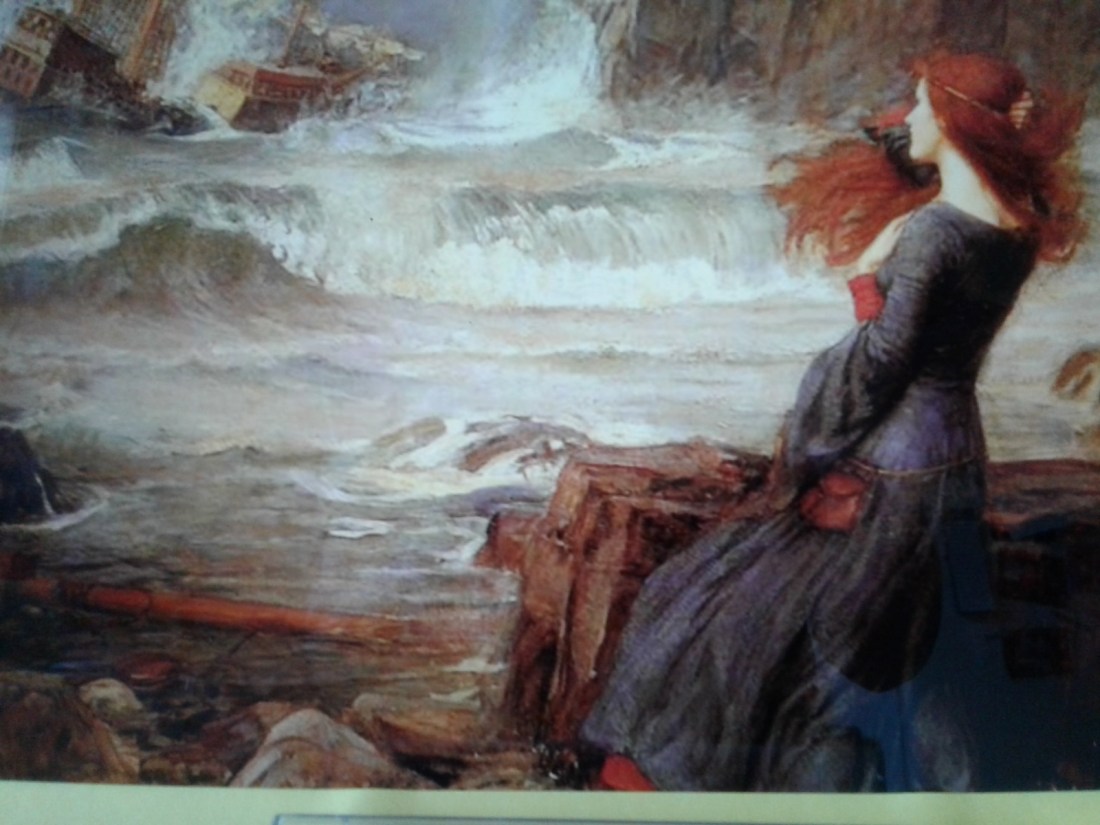
Oh before I forget. Helen was exceptionally beautiful inside and out with a pure heart, and looked like an angel with classical celtic looks; wavy, long red (rua) hair – I’ll have to switch to Irish here as the English description does no justice to it, but as I’m still learning may get this only approximately correct: I’ll just put this in for now and come back to it later once I’m more confident in how to say what I want to say ! ‘Bhí sí (Helen) go hálainn (beautiful) le gruaig fhada rua uirthi (with long red/auburn hair ‘on her’), agus bhí ceann, cúl, craobhach uirthi (and was flowing, head of hair on her)’. When I listen to this song I think of Helen and imagine here to be the Maid of the song.
Just to end on a lighter note, I went to Culmore which is just outside of Derry on Loch Foyle – and went for a pint of Guiness in the pub there ,and asked about the song and the barmaid and staff had never heard of it !
And wait for it, I actually met Carla Dillon after her concert on Friday 6 May 2022 in Edinburgh at the Queen’s Hall. I went up to her to buy some merchandise and her longstanding pianist was there too – Sam Lakeman; they are both musically very gifted. Being exceptionally naughty, I started to speak to them in Gaelige/Irish knowing full well that Cara cannot speak Irish; I said ‘C’as tú Cara ?’ which is in the dialect of Ulster which I have been learning and applies for Dungiven, near Derry which is where Cara is from; and she says to me ‘I dont understand what you are saying to me’ !. Actually, there’s more but I’ll add to it later.
Verse 1
Leavin’ sweet lovely Derry.
For fair London town.
There is no finer harbour.
All around can be found.
Where the youngsters each evenin’.
Go down to the shore.
And the joy bells are ringin’.
For the maid of Cúil Mór.
Verse 2
The first time I saw her.
She pass-ed me by.
And the next time I saw her.
She bade me good-bye.
But the last time I saw her.
It grieved my heart sore.
For she sailed down Lough Foyle and…
…away from Cúil Mór.
Verse 3
If I had the power.
The storms for to rise.
I would make the wind blow out.
I’d darken the skies.
I would make the wind blow high.
And the salt seas to roar.
To the day that my darlin’.
Sailed away from Cúil Mór.
Verse 4
To the back parts of America.
My love I’d go and see.
For its there I know no-one.
And no-one knows me.
But if I don’t find her.
I’ll return home no more.
Like a pilgrim I’ll wander.
For the maid of Cúil Mór.
Verse 5 (added by author)
Now the maid lies a-waitin’.
As the light starts to fade.
For she’s bound home to Erin.
To the land our Lord made.
But the next time I see her.
I will grieve never more.
For she’ll e’er be my true love.
She’s the Maid of Cúil Mór.
From the Redcastle sessions
Here’s another version by the Bothy Band which is also awesome. These are the only two versions I have found so far which do credit to this beautiful song. I also have the lyrics for this which I posted on mudcat.org site as people were looking for the lyrics in very old threads probably before Google and Youtube came along making searches easy.
1. From sweet Londonderry, to the fair London Town There is no other nicer harbour, anywhere to be found Where the children each evenin’, is a-playin’ around the shore And the joybells are ringin’, for the maid of Cúil Mór.
2. The first time that I met her, she passed me by The next time that I met her, she bade me goodbye But the last time that I met her, she grieved my heart sore. For she sailed down Lough Foyle, and away from Cúil Mór.
3. If I had the power, the storm to rise I would blow the wind higher, for to darken the skies I would blow the wind higher, to make the salt seas to roar On the day that my love sailed, away from Cúil Mór.
4. To the north of America, my love I’ll search for For there I know no one, nor no one knows me But should I not find her, I’ll return home no more But like a pilgrim I will wander, for the maid of Cúil Mór.
5. [2 repeats]
Ok so I’m interested in this comment below the Youtube video which has me intrigued. Is it really about a ship or a real girl ?
It’s a song about a ship, the Maid of Coolmore, sailing off to America, and it opens with what was, essentially, an announcement of the ship’s sailing. The ship is equated, poetically, to the girl in the song who is sailing away.
“An tSeanbhean Bhocht” is the Irish for “Poor old woman”, a personification of Ireland, and is a traditional Irish song from the period of the Irish Rebellion of 1798, and dating in particular to the lead up to the French expedition to Bantry Bay, that ultimately failed to get ashore in 1796.
This expedition is known in France as Expédition d’Irlande (1796-1798). There were two French expeditions, the first to land in Bantry Bay (the fleet set sail from Brest on 15 December 1796), and a second much smaller expeditionary French force under General Jean Humber landed at Killala on August 22nd 17981 2. Both expeditions ultimately failed. Also see “French Expeditions to Ireland (1796-1798)”3 for a narrative of the events that unfolded including the failed Batavian Republic expedition of 1797 (the Batavian Republic was the Dutch sister republic of the French Republic).
There were then two more French raids in 1798:
“a second raid – ie. the first being the one under General Jean Humber referenced above – accompanied by Napper Tandy, came to disaster on the coast of Donegal; while Wolfe Tone took part in a third, under Admiral Jean-Baptiste-François Bompart, with General Jean Hardy in command of a force of about 3,000 men. This encountered a British squadron at Buncrana on Lough Swilly on 12 October 1798. Tone, on board the ship Hoche, refused Bompart’s offer of escape in a frigate before the battle of Tory Island, and was taken prisoner when the Hoche surrendered. Tone was brought ashore at Letterkenny Port and all French forces of the Hoche were taken to Lord Cavan’s Letterkenny home where he faced arrest”4.
An tSeanbhean bhocht
The Wiki article “The Sean-Bhean bhocht”5 provides a great introduction for this traditional Irish song paraphrased in the first paragraph above and as follows:
“The Sean-Bhean bhocht” (pronounced [ˈʃanˠˌvʲanˠ ˈwɔxt̪ˠ]; Irish for “Poor old woman”), is often spelled phonetically as “Shan Van Vocht”
the Sean-Bhean bhocht is used to personify Ireland, a poetic motif which heralds back to the aisling of native Irish language poetry
many different versions of the song have been composed by balladeers over the years, with the lyrics adapted to reflect the political climate at the time of composition
however, the title of the song, tune and narration of the misfortunes of the Shean Bhean bhocht remain a constant
the song and lyrics express confidence in the victory of the United Irishmen in the looming rebellion upon the arrival of French aid.
The version in this article ‘as Gaelige’ is in the native Irish language. The song has a very popular English version also which is not covered here.
In Cúige Mumhan (the province of Munster), in ‘canúint na Mumhan’ (the Irish language dialect of Munster) – this is pronounced as ‘an tan van voct. ‘An tSeanbhean Bhocht’ has been anglicised to the ‘Sean-Bhean bhocht’ or to ‘the Shan Van Vocht’.
The wiki article “Aisling”6 says that:
the aisling (Irish for ‘dream’ / ‘vision’, pronounced [ˈaʃlʲəɲ], approximately /ˈæʃlɪŋ/ ASH-ling), or vision poem, is a Mythopoeic poetic genre that developed during the late 17th and 18th centuries in Irish language poetry
in the aisling, Ireland appears to the poet in a vision in the form of a woman from the Otherworld: sometimes young and beautiful, other times old and haggard. This female figure is generally referred to in the poems as a spéirbhean (pronounced [ˈsˠpʲeːɾʲvʲanˠ], ‘heavenly woman’). She laments the current state of the Irish people and predicts an imminent revival of their fortunes, usually linked to the restoration of the Roman Catholic House of Stuart to the thrones of Great Britain and Ireland
many aisling poems are often still sung as traditional sean-nós songs.
As an aside, Aisling also means dream or vision in Gaelige (the Irish language) and is a very popular Irish girl’s name!
The translation provided below is my own, as I could not find any for the Gaelige version, so I’m more than happy to be notified of any errors or omissions, or improvements. Please note that the lyrics are not the same as the English version, which is probably more widely known in Ireland, which makes the Gaelige version very special in my opinion.
In an attempt to keep this article brief, I haven’t gone into too much detail about the historical context, but if you open the reference articles, you can find narrative and links to find out more about the detailed chain of historical events which led up to l’expédition d’Irlande. Some interesting points though are copied below (also from Edward Rutherfurd’s historical novel “Ireland Awakening”):
l’expédition d’Irlande de 1796: once preparations were complete, the French fleet set sail from Brest on December 15, 1796 with approximately 15,000 soldiers on a variety of ships of the line, frigates, and transports. Once at sea, the weather did not co-operate and the French ships were scattered by a storm3
Rutherfurd in “Ireland Awakening”7 says that the results of Wolfe Tone’s efforts in France had been quite remarkable. Theobald Wolfe Tone, (born June 20, 1763, Dublin, Ireland —died November 19, 1798, Dublin)8, was an Irish republican, and in October 1791 he helped found the Society of United Irishmen, a republican society determined to end British rule, and achieve accountable government, in Ireland. He was instrumental in bringing about l’expédition d’Irlande de 1796. Rutherfurd further says that Tone had really impressed the Directory who governed the new, revolutionary republic. So much so that they had sent not a token contingent but a fleet of 43 ships, carrying 15,000 troops. Equally important, he says, the ships carried arms for 45,000 men. Most importantly, they were under the command of General Hoche, who was the rival of the republic’s rising star, Napoleon Bonaparte. Louis Lazare Hoche ; 24 June 1768 – 19 September 1797) was a French military leader of the French Revolutionary Wars1. Rutherfurd prefaces this by saying that “history furnishes many tantalising moments – turning points when, had it not been for some chance condition, the course of future events might have changed entirely. The arrival, on 22 December 1796 of the French fleet in sight of Bantry Bay, at the south-western tip of Ireland, is one of them”6
in conclusion, each French expedition failed to achieve the goal of liberating Ireland, but their failures were due more to poor timing and weather than the superiority of the British navy. General Humbert’s expedition in 1798 successfully landed French troops in Ireland, becoming the only enemy force to land troops on the British Isles in modern history. He defeated the British at the Battle of Castlebar which became known as the “Races of Castlebar” due to the speed of the British retreat9. Against all odds, Humbert led his small force halfway across Ireland before being surrounded and defeated by superior British numbers. Had the French Directory acted sooner and in conjunction with the Irish uprising in May of 1798, events may have turned out very differently. In the years following the Irish uprising, Lord Cornwallis led reforms to alleviate some of the underlying causes of the Irish rebellion of 1798, but the Irish would spend another century striving for independence3.
A small selection of ‘An tSeanbhean Bhocht’ videos
The song seems in canúint na Mumhan which seems appropriate as this is likely where it originated as the French were to land in Bantry Bay.
Gaelige
Aistriúchán – translation
Curfá
Chorus
Tá na Francaigh teacht thar sáile
The French are coming over the seas
Arsa an tseanbhean bhocht
Says the poor old woman
Tá na Francaigh teacht thar sáile
The French are coming over the seas
Arsa an tsean bhean bhocht
Says the poor old woman
Táid (tá siad) ag teacht le soilse ré
They are coming with the light of the moon
‘S beidh anseo le fáinne an lae a
And they will be here with the dawning of the day
‘S beidh ár namhaid go cráite tréith
And it will be our enemy that are tormented and weakened
Arsa an tsean bhean bhocht
Says the poor old woman
Véarsaí
Verses
1
Is cá mbeidh cruinniú na Féinneb?
And where will it be, the Fenians meeting ?
Arsa an tseanbhean bhocht
Says the poor old woman
Cá mbeidh cruinniú na Féinne?
Where will it be, the meeting of the Fenians ?
Arsa an tseanbhean bhocht
Says the poor old woman.
Thíos ar bhántaibh leathan réidhc
Down below on the broad and wide, smooth and level grassy plains
Cois Chill Dara ghrámhar shéimhc
Beside lovable, sweet Kildare
Pící glana ‘s claimhte faobhaird
Clean pikes and sharp edged swords
Arsa an tseanbhean bhocht.
Says the poor old woman.
2
Is cén dath a bheidh in airde ?
And what colour will be the highest ?
Arsa an tseanbhean bhocht.
Says the poor old woman
Cén dath a bheidh in airde ?
What colour will be highest ?
Arsa an tseanbhean bhocht.
Says the poor old woman
Is ar bhrat uaine bhuacach arde
It is on our banner of verdant green, proud, and tall
Gaoth dá scuabadh in uachtar barr
Wind rippling it at the very top
Is faobhar an óinseach duais le fáil ann
It’s the sharp edge of a sword the fool’s reward to find there
Arsa an tseanbhean bhocht.
Says the poor old woman
3
Is a bhfaighimid fós ár Saoirse?
And will we receive yet our freedom ?
Arsa an tseanbhean bhocht.
Says the poor old woman
An bhfaighimid fós ár saoirse?
Will we receive yet our freedom?
Arsa an tseanbhean bhocht.
Says the poor old woman
Beimid saor idir bhun is craobhf
We will be free between root and branchf
Beimid saor ó thaobh go taobhf
We will be free from side to sidef
Saor go deo le cabhair na naomh!
Free forever with the help of the saints!
Arsa an tseanbhean bhocht.
Says the poor old woman
Footnotes
a. “Le fáinne an lae” = “with the ring of the day” meaning the dawning of the day ie. dawn, due to the ring of light made at dawn as the sun rises b. ‘Na Féinne’ or the ‘fenians’ are the legendary warrior bands of Fionn Mac Cumhaill c. ‘Thíos ar bhántaibh leathan réidh ; Cois Chill Dara ghrámhar shéimh’ = Down below on the broad and wide, smooth and level grassy plains ; Beside lovable, sweet Kildare (this maybe the Curragh of Kildare referred to in the English version of the song) d. ‘with their pikes in good repair’ according to the English version ; likely means with their pikes and sharp edged swords, or in general their weaponry, at the ready e. ‘Is ar bhrat uaine bhuacach ard’ means a lofty, luxuriant, military banner ; uaine means it is a vivid, verdant, green ; maybe the emerald green of Ireland f. “Beimid saor idir bhun is craobh ; Beimid saor ó thaobh go taobh” – “We will be free between root and branch ; we will be free from side to side” – This is maybe a metaphor for Ireland being free following a ‘root and branch’ change meaning every part of Ireland will be free, and from coast to coast as per the English version of the song. “Root and branch” is an idiom for complete change https://www.collinsdictionary.com/dictionary/english/root-and-branch#:~:text=phrase,destroy%20slavery%20root%20and%20branch.
There is another interpretation of why this battle is called the “Races of Castlebar” that I found in a youtube comment to https://www.youtube.com/watch?v=tE4g_HCZPaY and just repeating it here with huge thanks to the poster Aaron Conlon ‘@aaronconlon3880’: “The British force was made up of 6,000 troops with no combat experience and led by General Gerard Lake (an over confident leader) who set up defensive positions in the town of Castlebar. The Franco-Irish force was made up of 900 experienced French riflemen and 1,100 rebels armed with rifles taken from a captured British garrison and they were led by General Jean Humbert (a French General of Irish descent who won several battles in the Rhine campaign). Rebels had earlier captured the nearby town of Killala and Lake thought Humbert would attack Castlebar using the road from Killala so he focused his defences on that side of town. Instead most of the Franco-Irish force moved along Lough Conn and attacked from the other side of town. They quickly captured the British artillery and led a bayonet charge from behind that broke the British lines. This cleared the way for a Rebel cavalry charge from Killala that forced the British to flee the town and abandon the county all together. The cavalry charge was later nicknamed “the Castlebar races”.
About me, my connection to the ‘West’-Connacht in Éirinn (in Ireland), and the historical context
Cad’é mar atá sibh ? Tá failte romhaibh go leir anseo a mo bhlog. An bhfuil sibh go maith ? Iontach ar fad ! An-deas ! Is mise Stephen. Ba mhaith liomsa ag labhairt den t-amhrán ‘The West’s Asleep’. Is amhrán cáiliúil é seo !
A quick synopsis
I believe this song is actually about the Castlebar Races and that is what the “The West’s awake! the West’s awake!” in line 6 of the 4th stanza is about. It is actually a poem by Thomas Davis. It has been made into a song in the air of ‘The Brink of the White Rocks’.
The “Castlebar Races” and “L’Expédition d’Irlande de 1798“
I feel there is a reason that has ‘awakened’ in me to have attempted to decode this famous poem by Thomas Davis. My ancestors on my mum’s side are indeed from the West. – just three generations back from Cathair na Mart – Westport – from one of the four proud provinces of Ireland – Connacht in County Mayo (/ˈmeɪoʊ/;[4]Irish: Contae Mhaigh Eo, meaning “Plain of the yew trees“). My great great grandfather and his sister lived very close to Castlebar as at the 1901 Census of Ireland just under 10 kms away. I did not know this when I started researching this song, making this all a bit bizarre, with truth being stranger than fiction sometimes, so they say !
So my ancestors are from the very region and very close to where the very last successful invasion of the British Isles-Ireland at the time in all history occurred at Kilcummin Strand in Contae Mhaigh Eo, and at very place where the ‘men of the west’ and the French invasion forces led by General Humber of the French revolutionary militia, whose rising star was no less than Napoleon Bonaparte, routed the English forces in the famous ‘Races of Castlebar’, with Castlebar just down the road from Westport-Cathair na Mart. This seems to be what the fourth verse of the ‘West’s Asleep’ could be about.
At the ‘Castlebar Races’, a combined force of 2,000 French troops, led by General Jean Joseph Amable Humber of the French revolutionary militia, and Irish patriots from the ‘West’, routed a combined force of 6,000-strong British and Protestant loyalist militia troops led by 1st Viscount General Gerard Lake. There is a fantastic map of the progression of the campaign here – screenshot from https://www.frenchempire.net/articles/ireland/:
This was part of “L’Expédition d’Irlande de 1798“: it is even famous in France: ‘est une tentative de libération de l’Irlande de l’occupation anglaise que mena une escadre française afin de soutenir les rebelles irlandais pendant la rébellion irlandaise de 1798‘.
It seems plausible that Thomas Davis wrote this poem about l’expédition d’Irlande de 1798, and then worked backwards across 700 years to replay the chronology of significant and milestone events in the turbulent history of Ireland leading up to l’expédition d’Irlande.
It may be just too much of a coincidence that l’expédition d’Irlande happened just about 40 or so years prior to Thomas Davis writing the ‘West’s Asleep’. It could have been top of mind for him as the most recent successful rebellion against the English – albeit with limited success, it was nevertheless a significant achievement at the time on the road to the eventual liberation of Ireland.
Introduction to the ‘West’s Asleep’
This song is a ballad from a poem written by Thomas Davis. A Newstalk show1 provides some background to this ballad saying that it’s a kind of montage, like in the movies, of iconic events in the history of Ireland since the 12th century.
The interviewee says that Thomas Davis, was an Irish patriot born in Mallow in County Cork on 14 October 1814 not long after the death of his father (quoting the Irish Times for this) who was an army surgeon.
Four years later his family moved to Dublin and settled in Lower Baggot Street. He went to school in Lower Mount Street and in later years went to Trinity College, and from there onto study law, and was called to the bar a year or so after he graduated.
The show also discussed why the song is often referred to as the ‘West’s Awake’ instead of asleep – the title being changed to make it more evocative ! 1.
Some other interesting information is that this song is considered the Galway anthem and as a theme for the GAA Galway team, and one source said it was a national rallying cry.
Who was Thomas Davis ?
There is a lot of material in multiple reference sources which I haven’t included as there were too many:
he had a tragically short life : born 14 October 1814 and died at only the age of 30 of scarlet fever just before the great famine – he died within a week of it’s onset; one source said he could have changed the course of ‘An Gorta Mór’ (the Great Famine of Ireland) if he had lived
was a writer and a protestant nationalist, very much influenced by Wolfe Tone, and a prominent organiser of the ‘Young Ireland’ movement
was very well published and wrote ‘A Nation Once Again’
was an idealist; instead of asking ‘why?’ , asked ‘why not?’ imagining how things ought to be !
he advocated for the Irish Nation, the Irish language, and preached unity between protestants and catholics; although he was not a native speaker like the Nationalist Leader Daniel O’Connell
with Charles Gavan Duffy and John Blake Dillon, he established and was a founding editor of ‘The Nation’, the weekly nationalist newspaper of what came to be known as the Young Ireland movement – a voice for modern Irish nationalism. While embracing the common cause of a representative, national government for Ireland, Davis took issue with Daniel O’Connell by arguing for the common (“mixed”) education of Catholics and Protestants and by advocating for Irish as the national language
fourth and last child of James Davis, a Welsh surgeon in the Royal Artillery based for many years in Dublin, and an Irish mother. His father died in Exeter a month before his birth, en- route to serve in the Peninsular War. His mother was Protestant, and also related to the Chiefs of Clan O’Sullivan of Beare, members of the Gaelic nobility of Ireland.
Clanns of Erin-Ireland – “Sing oh! not even their sons’ disgrace” – the Norman invasion of Ireland and commencement of English rule (1171)
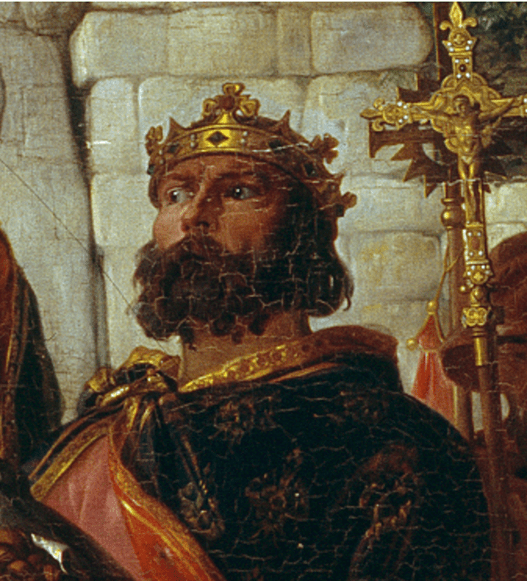
The likely protagonist – the “disgraced” son of the clanns of Ireland of the West’s Asleep verse 2 line 7 – could be Dermot MacMurrough (Diarmait Mac Murchada): a Gaelic Lord and King of Leinster in Ireland from 1127 to 1171 – instrumental in enabling the Anglo-Norman invasion of Ireland in 1169; and then following on from that unfolded 700 years of direct English and later British involvement in Ireland: https://en.wikipedia.org/wiki/Diarmait_Mac_Murchada. Source: Wiki and the National Gallery of Ireland.
Strongbow (also known as Richard fitz Gilbert and Richard de Clare) was earl of Pembroke and Strigoil. He was the eldest son of Gilbert de Clare, earl of Pembroke, and succeeded to his father’s earldom in 1148.
Dermot MacMurrough, king of Leinster, sought Strongbow’s assistance in regaining his power in Ireland. In return he promised Strongbow his daughter Aoife in marriage. Strongbow landed in Ireland on 23 August 1170 and attacked Waterford with a force of some two hundred knights and one thousand other troops. Aoife and Strongbow were married at Christ Church Cathedral soon after Waterford was seized.
MacMurrough died in Ferns in May 1171, at the height of his power, leaving his kingdom to Strongbow. Strongbow died in late May 1176. By some accounts he was buried in Christ Church, Dublin but, according to others, he is buried in Gloucester.
In October 1171, King Henry landed with a large army to assert control over both the Anglo-Normans and the Irish. This intervention was supported by the Roman Catholic Church, who saw it as a means of ensuring Irish religious reform, and a source of taxes.
King Henry II proceeded to south Wales and, with a fleet of 400 ships, on 17 October 1171 became the first reigning king of England to set foot on Irish soil.
He arrived in Waterford Harbour and on the following day, October 18th, 1171, together with a huge army of knights and soldiers, he journeyed to Waterford City to conclude what we now know as the Norman Invasion.
The West’s Asleep
The ‘West’s Asleep’ is included in ‘The Poems of Thomas Davis (with notes and historical illustrations edited by Thomas Wallis) (1846)’2. Note that I checked that there is no interpretation in this work about the ‘West’s Asleep’.
The West’s Asleep: a Munster air / poetry by Thomas Davis; music arranged by Dermot MacMurrough (coincidentally, the same name as the King of Leinster3.
The West’s Asleep was published in the Spirit of the Nation4. The music is in the Air of ‘The Brink of the White Rocks’.
There are some notes under the song which attempt to explain some of the historical events which appear throughout it.
The West’s Asleep
1. When all beside a vigil i keep. The West’s asleep, the West’s asleep. Alas! and well may Erin ii weep. When Connacht iii lies in slumber deep. There lake and plain smile fair and free. ‘Mid rocks—their guardian chivalry.
Sing oh! let man learn liberty. From crashing wind and lashing sea.
2. That chainless wave and lovely land Freedom and Nationhood demand. Be sure, the great God never planned. For slumbering slaves, a home so grand. And, long, a brave and haughty race. Honoured and sentinelled the place.
Sing oh! not even their sons’ disgrace. iv Can quite destroy their glory’s trace.
3. For often, in O’Connor’s van v.
To triumph dashed each Connacht clan. And fleet as deer the Normans ran. Through Coirr-sliabh Pass, and Ardrahan. vi And later times saw deeds as brave. And glory guards Clanricarde’s grave. vii Sing oh! they died their land to save. At Aughrim’s slopes viii and Shannon’six wave.
4. And if, when all a vigil keep. The West’s asleep, the West’s asleep. Alas! and well may Erin weep. That Connacht lies in slumber deep. But, hark! some voice like thunder spake. “The West’s awake! the West’s awake!” “Sing oh! hurra! let England quake. We’ll watch till death for Erin’s sake!”x
i) This may refer to the other provinces of Ireland keeping the vigil with the Anglo-Normans who had invaded Ireland in the 12th century.
ii) Erin = Ireland = the term sometimes used for Ireland in poetry and music. Éire, f. (ds. -rinn, gs. ~ann) https://www.teanglann.ie/ga/fgb/%C3%A9ire. Interestingly ‘Ireland’ may be derived from Éiru- the goddess – and land, Éirú-land = Ireland : named by the Viking settlers morphing into Ireland. Ériu (today more commonly known as Éire) is the Irish name for Ireland – named after the powerful female goddess https://en.wikipedia.org/wiki/%C3%89riu.
iii) Connaught = Cúige Chonnacht = the province of Connaught = ‘The West’.
iv) This is most likely to be the King of Leinster Diarmait Mac Murchada – why his actions constituted a ‘disgrace’ could be because of the following sequence of events unfolding in the 12th century:
Diarmait kidnapped the wife of the King of Breffney, Tiernan O’ Ruark in 1153
O’Ruark formed an alliance with Rory O’Connor (Ruaidrí mac Tairrdelbach Ua Conchobair – the last High King of Ireland (1166 -1198) also King of Connaught (1156 -1186)
O’ Connor led the Gaelic chiefs in driving the King of Leinster into exile in 1166
the King of Leinster fled to France, and then England where he persuaded Richard de Clare – 2nd Earl of Penbrooke aka ‘Strongbow’, to lead an army in 1169 to retake his kingdom, in return for the hand in marriage of his daughter Aoife, and then succession to become the King of Leinster
Strongbow claimed Leinster following Diarmait’s death in 1170
in October 1171, King Henry II of England landed with a large army to assert control over both the Anglo-Normans and the Irish
the Norman invasion was a watershed in the history of Ireland, marking the beginning of more than 700 years of direct English and, later, British involvement in Ireland5
v) O’Connor’s ‘van’ = Rory O’Connor (Ruaidrí mac Tairrdelbach Ua Conchobair – the last High King of Ireland (1166 -1198) also King of Connaught (1156 -1186) ; ‘vanguard’ being the foremost part of an advancing army or naval force.
vi) These are Coirr-sliabh pass for ‘Curliew Pass’ (Curlew Mountains – north eastern Connacht), and Ard Rathain (a village in the south of County Galway) (Ard Rathain means height of the ferns ‘as Gaelige’ – in the Irish language: ‘as’ means out of Irish ; it’s how you say: in the Irish language). These presumably are referring to the Battle of Curlew (15 August 1599)6 and Ard Rathain (1225)7 – two famous and iconic victories for the Irish / Gaels over the Normans and English.
vii) ‘Clanricarde’s grave’: note this means Clann Ricarde = Richard’s family and descendants ; likely a reference to the Irish nobleman Ulick Burke , fifth earl of Clanricarde, as supreme commander of the Irish and Royalist forces during the Cromwellian conquest of Ireland8. The siege of Galway was part of the Irish Confederate wars (1641-1653):
The siege of Galway took place from August 1651 to 12 May 1652 during the Cromwellian conquest of Ireland. Galway was the last city held by Irish Catholic forces in Ireland and its fall signalled the end to most organised resistance to the Parliamentarian conquest of the country
Clanricard tried to assemble an army at Jamestown County Leitrim to relieve Galway.
(viii) The Battle of Aughrim (12 July 1691)9 in County Galway was the end of the war of the two kings with victory to the protestant King William of Orange.
xi) The river Shannon. Abhainn na Sionainne, an tSionainn = as Gaelige ; it means the river of possessor of wisdom.
Throughout the seventeenth century, the river was used in the Irish Confederate Wars to divide the locals from the English Parliamentarians, who struggled to cross it.
(x) An allusion from the West turning from asleep to it’s awakening. This could possibly be a reference to the last rebellion and rising in the run up to Davis’ short life.
In 1795 Theobald Wolfe Tone, who was born in Dublin and leader of the United Irishmen, fled to France to seek alliance with the French for the invasion of Ireland (L’Expédition D’Irlande)10
The invasion fleet was unable to land in Bantry Bay in 1796 due to various factors including the stormy seas and partial destruction of the fleet at sea and it failed
However, in 1798, there was another attempt when the French landed almost 1,100 troops at Cill Chuimín Strand, in north west County Mayo. This was to assist the Irish revolution begun by Theobald Wolfe Tone’s Secret Society of United Irishmen
A combined force of 1,000 French troops and Irish patriots from Connacht routed a force of 6,000 loyalist militia in what would later become known as the “Castlebar Races” or “Races of Castlebar”
On 31 August, the rebels proclaimed a “Republic of Connaught” in Castlebar- which lasted 12 days before being retaken. This rebellion also ultimately failed11
More on this is provided at reference 12 ; it says that:
Apart from skirmishes in the Wicklow Mountains the 1798 United Irishmen Rebellion was seemingly crushed after the siege and subsequent shelling of the rebels encampment at Vinegar Hill in June 1798
Two months later however, in August 1798, a small French fleet beached near Killala in County Mayo. Men from Ireland’s most western counties Sligo, Mayo and Galway joined the French army and brought the rebellion back to life
Initially the combined French-Irish army, commanded by General Humbert, achieved some great successes in a campaign commonly known as the Races of Castlebar. The successes of this small army filled up with untrained civilians, were primarily due to the lack of crown forces in the west
French reinforcements arrived too late and the advance came at a standstill when they met the English forces near Ballinamuck in County Longford. The ensuing Battle of Ballinamuck marked the end of this French invasion of Ireland.
The Spirit of the Nation: Ballads and Songs with Original and Ancient Music, Arranged for the Voice and Pianoforte (Dublin: James Duffy, 1845): 73Google Scholar.
It is really hard to get a clear picture of the battle of Ard Rathain referenced in the song as you have to painstakingly work your way through the the Annals of Connacht7 for 1225 which is an English translation of what the monks wrote down in old Irish. It’s really hard to read !!
It seems that Cathal Crobhdearg, King of Connacht to 1224, brother of Ruaidhrí Ó Chonchobair (Rory O’ Connor – the very last high king of Ireland) was succeeded by his son Aed mac Cathal Chrobhdearg. Aed mac Cathal’s rivals were the sons of Ruaidhrí, Toirrdelbach and Aed.
To cut a long story short and skipping over heaps of detail – and probably getting this completely wrong !, this led to a great rebellion in Connacht in 1225.
The belligerents were the King of Connacht Aed mac Cathal supported by the Galls (the foreigners – the Anglo-Normans); while on the other hand the rivals for the Kingship of Connacht being the two sons of Ruaidhrí who were supported by some other minor kings of territories within Connacht [and Aed O’ Neill but he and his armies/forces weren’t in the conflict)].
The civil war was about claims to the Kingship of Connacht.
Ultimately, Aed mac Cathal won and the sons of Ruaidhrí had to go back to the O’ Neill territory in the north.
There’s reference to at one point to Connacht being filled with armies (three of them Galls’ armies).
Battle of Ard Rathain – 1225
Anyway, the action happens when Fedlimid, brother of Aed mac Cathal, his principal men, and a large force of Galls, are sent to raid Eogan O’ hEdin (Owen O’Heyne) in Uí Fiochrach Aidni (a kingdom in the south of Connacht), and before raiding the whole ‘country’ in the early morning (which must mean Uí Fiochrach Aidni), encamp for the night at Ard Rathain.
Rory O’ Connor’s sons’ allies (O’ Flaithbertaig and the sons of Muirchertach) get intelligence of this and their forces of Gaels surround Ard Rathain and are sent in to rout the Galls early in the morning – which they successfully do to the Galls fleeing east but not so successfully to those fleeing to the west as they received losses themselves.
Before all this happened there was all kinds of plundering, slaying and so on going on, with the plundering having attracted so many Gall forces to come into Connacht at that time.
It was all followed by plague and famine at the end.
This song is about a boatman who sails frequently between the two remote isles of Inis Gé (Inishkea Islands in Co. Mayo in the West of Ireland) off the West Coast of Ireland in County Mayo to Galway, and is besotted with a fair maiden. He wishes his love and ‘little treasure’ (a stóirín) to elope with him. Sadhbh Ní Bhruinealla, Ní (reduced from Iníon Uí – “daughter of descendant of”).
Perhaps a clue as to what finally happens is in the following verse.
Nuair a théimse ‘un an chomhra ag comhaireamh an airgid Bíonn an iníon is an bhean is iad caillte le gean orm.
When I go to the chest to count the money, the daughter and her mother are overcome with fondness for me.
However, we dont know if our heroine Sadhbh ever actually elopes with the man !
The name Sadhbh is a girl’s name of Irish origin meaning “sweet, goodness”. Sadhbh was the name of several real and legendary Irish princesses, including the daughters of Conn of the Hundred Battles, of Queen Medb of Connacht, and of King Brian Boru. It’s also written Sabha. One of the most authentic Irish names for girls, it is also unfortunately one of the most difficult to export. https://nameberry.com/babyname/Sadhbh
This is a sean-nós song meaning ancient or old Irish to be sung in the traditional way which is unaccompanied by musical instruments.
…It’s about a little girl, in fact. In the words of the song, you’d think the girl was a grown-up girl, you know, but she was beautiful – like Peigín Leitir Móir. And everybody was supposed to be looking out for this girl, whoever passed by – she was so beautiful that everybody was looking out for her. Even the fishermen, when they were going to their boats, they used to dip their sails when they were passing her house.https://www.joeheaney.org/en/sadhbh-ni-bhruinniligh/
The islands of Inis Gé or ‘Inishkea’ (North and South) are part of County Mayo, off the West Coast of Ireland, and are now uninhabited. The name means ‘Goose Islands’. https://en.wikipedia.org/wiki/Inishkea_Islands. This article says there is evidence of habitation from at least 5,000 years ago, pure white sandy beaches and crystal clear water, it was home to fishermen and pirates, and escaped the ravishes of the potato blight on the mainland due to the prevailing winds largely keeping the blight away from Inis Gé !
Sadhbh is a popular Irish girl’s name but is pronounced as S – eye – v. Actually after learning the Irish language for 3 years now, it has no equivalent English translation as one of the sounds within it ‘dh’ does not exist in English ! But S-eye-v is an approximation. And in the song it is pronounced as ‘how’. This is because in Connemara , Sadhbh is pronounced as Sow. The name changes from Sadhbh to ‘ a Shadhbh’ in all but the very first line, as this is the common way that the Irish people address familiar friends and family (the vocative case), and ‘Sh’ is caused by the Irish language mutation (lenition) or séimhiú (softening) of the start of words. Finally, the S becomes silent with the lenition. The first video below by Sibéal Ní Chasaide is really lovely as she takes us through the first verse – for the Irish language childrens’ series Cúla4 Ar Scoil, with her sister accompanying her on the piano.
Sadhbh Ní Bhruinnealla is an old sean-nós song attributed to Labhrás Mac Con Raoi from Mace Head, Co. Mayo, a boatman who ranged the coasts of Mayo and Galway. He is said to have composed it between 1815 and 1821, and the woman in the song is said to have been from Inishkea, Co. Mayo. It is often called “Sadhbh Ní Mhuinghile.” Below are the Irish lyrics and English translation for Liam Ó Maonlaí’s version. This is a classic sean-nós song and is better sung unaccompanied or with simple drone backing.
Ní iarrfainn bó spré le Sadhbh Ní Bhruinnealla, Ach Baile Inis Gé is cead éalú ar choinníní Óra a Shadhbh, a Shadhbh Ní Bhruinnealla, A chuisle is a stóirín, éalaigh is imigh liom
I would ask no dowry for Sadhbh Ní Bhruinnealla, but the village of Inis Gé and a permit to hunt rabbits. Óra, Sadhbh, Sadhbh Ní Bhruinnealla, My heart’s beloved, elope and leave with me.
Máistir báid mhóir mé a’ gabháil ród na Gaillimhe, D’fhliuchfainn naoi bhfód is ní thóigfinn aon fharraige. Óra a Shadhbh, a Shadhbh Ní Bhruinnealla, Tabhair dom do lámhín, éalaigh is imigh liom.
I’m the master of a húicéiron the way to Galway, I’d wet nine sods of turfbut would not take any water in. Óra, Sadhbh, Sadhbh Ní Bhruinnealla, Give me your wee hand, elope and leave with me.
Máistir báid mhóir go deo ní ghlacfad, Nuair a fhaigheann siad an chóir ‘sé1, is dóichí nach bhfanann siad2. Óra a Shadhbh, a Shadhbh Ní Bhruinnealla, Tabhair dom do lámhín, éalaigh is imigh liom.
The master of a hooker I’d never accept, when the wind is favourablethey are not inclined to stay. Óra, Sadhbh, Sadhbh Ní Bhruinnealla, Give me your wee hand, elope and leave with me.
Níl falach i gcabhail ar Shadhbh Ní Bhruinnealla, Ach seanchóitín donn gan cabhail gan muinchille. Óra a Shadhbh, a Shadhbh Ní Bhruinnealla, Tabhair dom do lámhín, éalaigh is imigh liom.
Sadhbh is not wearing a stitch on her body, except an old brown coatwithout bodice or sleeve. Óra, Sadhbh, Sadhbh Ní Bhruinnealla, Give me your wee hand, elope and leave with me.
Fear maith i mbád mé togha fear iomraimh, Fear sluaisid’ is láí ar dhá cheann an iomaire. Óra a Shadhbh, a Shadhbh Ní Bhruinnealla, A chuisle is a stóirín, éalaigh is imigh liom!
I’m a good boatman, a fine oarsman, skillful with shovel or loy on either end of the ridge. Óra, Sadhbh, Sadhbh Ní Bhruinnealla, My heart’s beloved, elope and leave with me.
1. an chóir ghaoithe – a favourable wind ; ghaoithe is omitted ; so the entire construction means – when they find/receive/get a favourable wind ; meaning the other boat men sailing Galway Hookers ? this is pretty obscure ! 2. is dóichí nach bhfanann siad ; it is probable/likely – they would not stay
Ní iarrfainn de spré le Sadhbh Ní Bhruinnealla ach Baile Inis Gé is cead éalú ar choinníní.
Refrain – to add at the end of each verse. Óra a Shadhbh, a Shadhbh Ní Bhruinnealla, A chuisle is a stóirín, éalaigh is imigh liom.
I would ask no dowry for Sadhbh Ní Bhruinnealla, but the village of Inis Gé and a permit to steal up on rabbits. Óra, Sadhbh, Sadhbh Ní Bhruinnealla, My heart’s beloved, elope and leave with me.
Fear maith i mbád mé togha fear iomraimh Fear sluaisid’ is láí ar dhá cheann an iomaire.
I’m a good boatman, a fine oarsman, skillful with shovel or loy on either end of the ridge.
Máistir báid mhóir mé a’ gabháil ród na Gaillimhe D’fhliuchfainn naoi bhfód is ní thóigfinn aon fharraige.
I’m the master of a large sail boat (hooker) on the way to Galway, I’d wet nine sods of turf but would not take any water in.
Máistir báid mhóir go deo ní ghlacfad, Nuair a fhaigheann siad an chóir ‘sé is dóichí nach bhfanann siad.
The master of a hooker I’d never accept, when the wind is favourable they are not inclined to stay.
Mhionnóinn naoi n-uaire ar leabhar mór an Bhairéadaigh Nach scarfainn go deo le Sadhbh Ní Bhruinnealla.
I’d swear nine times on Barrett’s book that I’d never part with Sadhbh Ní Bhruinnealla.
Níl falach i gcabhail ar Shadhbh Ní Bhruinnealla, Ach seanchóitín donn gan cabhail gan muinchille.
Sadhbh is not wearing a stitch on her body, except an old brown coat without bodice or sleeve.
Nuair a théimse ‘un an chomhra ag comhaireamh an airgid Bíonn an iníon is an bhean is iad caillte le gean orm.
When I go to the chest to count the money, the daughter and her mother are overcome with fondness for me.
Nuair a thiocfas lá breá ‘gus an ghaoth ón bhfarraige Tabharfaidh mé Sadhbh liom go céibh na Gaillimhe.
When a fine day comes and the wind is from the sea, I’ll take Sadhbh with me to the pier in Galway.
Óra a Shadhbh, a Shadhbh Ní Bhruinnealla, A chuisle is a stóirín, ba rí-mhaith dhuit mise agat!
Óra, Sadhbh, Sadhbh Ní Bhruinnealla, my heart’s beloved, you would do right well to have me!
Footnote ‘Bád Mór’ – a Galway hooker; a large boat for transporting cargo including the peat bog turf, abundant on the mainland of Ireland, which was used for fuel – (presumably scarce on the islands), from the mainland to the islands, and then limestone, wood, and livestock, wood, potatoes, fish etc. on the way back; through the seas of Galway Bay to Galway: “a’ gabháil ród na Gaillimhe”, as referred to in the song; the largest in its’ class; to own one was to mean you had status in the community “is Máistir báid mhóir mé “; the roads in Connemara were only few and only fit for donkey and mule carts in those days, so these boats were relied on for transportation of all kinds of cargoe along the coast and to the islands; they slept and cooked in the hold of these boats under the deck, with access through a hatch which acted as a chimney; the line in the song probably means, while some of my sods of turf may get wet (only nine, a tiny amount – ‘D’fhliuchfainn naoi bhfód’), the boat is of a sound construction, seaworthy, and watertight to seawater, meaning its a really great boat that he has (ní thóigfinn aon fharraige=I would not take in any seawater!) ! so perhaps he is boasting of how good his boat is to Sadhbh !!, and that he is an important person higher in status than others like tradesmen and fishermen, and presumably wealthy; he has a chest of money right? (Nuair a théimse ‘un an chomhra ag comhaireamh an airgid).
Just in time for St Patricks Day, here is some information on a beautiful, sad, lament on the leaving of Ireland of an emigrant to New York City, for a new and hopefully, better life, to escape the ravishes of poverty and starvation in Ireland. But our protagonist longs for home, to return to the ‘land Saint Patrick blessed’. This is a truly sad and evocative song full of sadness, replaying the desperate plight of the people of Ireland, Erin in poetry. Lets reasonably assume our emigrant is a young lady sent by her family to New York to join relatives and friends already there, never to return home again to Ireland. Truly, it brings tears to my eyes when I hear this song introduced to me by my friend Edina from Hungary just nearly two years ago.
‘On the day that I did part, sure it broke my mother’s heart’. ‘Will I ever see my dear folks anymore ?’
It is likely that the poor child is sent to America by her family in common with so many others for a better life, emigration was encouraged and a family felt the best they could do for their children was to send them to America, perhaps to join family already there, who had made a success of their lives. Family in America would have to send the money to Ireland such as with the Adergoole 14 when the cost of sailing across the Atlantic from Ireland was about 700 pounds in today’s money for steerage class, which was about three year’s wages.
Irish traditional emigrant lament song: origin unknown: likely 19th century Ireland placing it as related to emigration to America following the Great Famine of Ireland.
Erin gra mo chroi means Ireland love of my heart and is a
lament for emigrants from Ireland for their own native land.
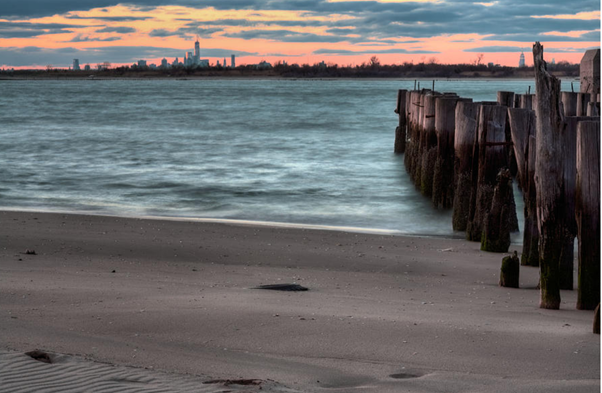
I definitely cant find anything on the provenance of this song on a quick search – and just about given up for now – so will just include some really interesting information instead including the famous sea shore in the song – or a very plausible candidate ! This was relatively easy to pinpoint as the Irish settlers in New York have large communities at only two urban beaches in the city.
Irish emigration to New York City
Irish Americans first came to America in colonial years (pre-1776), with immigration rising in the 1820s due to poor living conditions in Ireland. But the largest wave of Irish immigration came after the Great Famine in 1845.
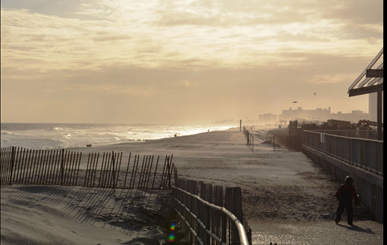
Rockaway Beach was once known as the
“Irish Riviera” because of the large Irish American population in
the area.[20] The community
itself has a total population of more than 13,000 people, making it the third
most populated neighborhood on the peninsula.[21] As of the 2000 United States Census, 25.4% of residents in ZIP code 11693 identified themselves as having Irish ancestry,
making the Rockaway Beach area the 2nd most Irish region in the whole
country—right after Boston, Massachusetts‘s South Shore, which has roughly
38–40% of its citizens claiming Irish, or mostly Irish, ancestry.[22]
While the Manhattan skyline is visible in the distance, the beaches of Rockaway Beach seem a world away.
Ohh Erin grá mo
chrói, you’re the dear old land to me
You’re the fairest that my eyes did e’er behold
You’re the land Saint Patrick blessed
You’re the bright star of the west
You’re that dear little isle so far away
At the setting of
the sun, when my long day’s work was done
I rambled down the seashore for a walk
And I being all alone I sat down upon a stone
For to gaze upon the scenes of New York
Oh Erin grá mo
chrói, you’re the dear old land to me
You’re the fairest that my eyes have ever seen
And if ever I go home, it’s from you I never will roam
You’re my own native land so far away
With the turf fire
burning bright on a cold dark winter’s night
And the snow flakes falling gently to the ground
When Saint Patrick’s Day has come, my thoughts will carry me home
To that dear little isle so far away.
Oh Erin grá mo
chrói, you’re the dear old land to me
You’re the fairest that my eyes have ever seen
You’re the land Saint Patrick blessed
You’re the bright star of the west
You’re that dear little isle so far away
On the day that I
did part, well it broke my mother’s heart
Will I never see my dear ones anymore?
Not until my bones are laid in the cold and silent grave
In my own native land so far away
Oh Erin grá mo chrói, you’re the dear old land to me You’re the fairest that my eyes have ever seen And if ever I go home, it’s from you I never will roam You’re my own native land so far away You’re my own native land so far away
Historical
context if the song is related to emigration to America after the Great Famine
of Ireland
The Great Irish Famine in Songs Erick
Falc’her-Poyroux, « The Great Irish Famine in Songs », Revue Française de
Civilisation Britannique [Online], XIX-2 | 2014, Online since 01 May 2015,
connection on 30 September 2016. URL : http:// rfcb.revues.org/277 ; DOI :
10.4000/rfcb.277
‘Those in power write the history, those who suffer write
the songs’ Frank Harte (1933-2005), sleeve notes for 1798: the First Year of
Liberty’
‘However biased a view the opening quote by Irish
traditional singer and collector Frank Harte may represent, an analysis of folk
songs about the Great Irish Famine deserves careful study, as one will find in
them views that are often told from palpable and vivid experience, and traces
of Irish history often described as dry statistics, rather than the human
tragedy it really was. It is generally considered that very few songs from the
famine era have survived: it is indeed a testimony to the power and importance
of traditional music and songs, and remarkably so in Ireland, that illiterate
people on the threshold of exile or death could find the strength to express
their misfortunes in such a poetic and elaborate form’
The sufferings of Ireland between 1845 and 1850 could
however hardly be overestimated, and the effects can still be felt in everyday
life after more than 150 years: with well over 8 million inhabitants on the
island in 1841 and a little under 6.5 million today, Ireland is the only place
in Europe whose population has decreased since the 1840s. By comparison, the
population of England (c. 13.6 million in 1841) has almost quadrupled, to c. 53
million today.46
A musical context
‘Ireland has had an exceptional musical reputation for
centuries, and a refined instrument, the harp, has served as its national
symbol since at least the thirteenth century. Even in the poorer classes, music
was an important part of Irish everyday life, as evidenced by the accounts left
to us by numerous witnesses, mostly from the eighteenth century onwards: All
the poor people, both men and women, learn to dance, and are exceedingly fond
of the amusement. A ragged lad, without shoes or stockings, has been seen in a
mud barn, leading up a girl in the same trim for a minuet: the love of dancing
and musick are almost universal amongst them.’
‘The second and most popular type of folk singing today in
Ireland, however, is a genre called ‘ballad singing’: it is a slightly later
development which was extremely popular all over Europe and appeared in urban
Ireland during the 17th century, probably under the influence of Scottish settlers,
mostly in the northern part of the island. It is generally sung in English and
tells a story on the classic themes of love, money, drinking, emigration, but
also on more political themes: The ballad as it exists is not a ballad save
when it is in oral circulation […]. Defined in the simplest terms, the ballad
is a folk-song that tells a story. […] What we have come to call a ballad is
always a narrative, is always sung to a rounded melody and is always learned
from the lips of others rather than by reading.’
Songs in the Irish
Language
‘A traditional song, often being the work of an anonymous or
forgotten author, can naturally be regarded as the representative expression of
a community; and, being still sung by subsequent generations, will have
successfully passed the test of time. Its continuous handling down from
generation to generation ensures that the feeling is an enduring one.’
Tom
Lenihan learned the song from a ‘semi-itinerant street singer-ballad seller
Billy Nevin from Kilrush some time in the early 1930s – he heard him singing it
while selling ballads at the local street cattle market.
Not sure how old Bully was, but everyone here (in Miltown
Malbay) refers to him being ‘old’ – he was tragically killed in a road accident
circa 1935, which would but his date of birth somewhere in the early half on
the 19th century (1860/70)
The practice of ballad sellers was to write out for, or
recite the songs they sold to a printer who produced them to order.
If Nevin followed this practice, and if Tom’s version is the
sole traditional source it is highly probable that the song came from oral
tradition rather than from another printed source
Checked
Wright’s ‘Irish Emigrant Songs and Ballads’ – surprisingly the song isn’t
included.
Re-listening to our recording, I’m convinced that it’s a
pre-famine song, though ITMA should be able to confirm or deny this. https://www.itma.ie/
Most of
the songs of this type came in the latter half of the 19th century and I am
cfairly certain this is the case here
Postscript
ERIN GRÁ MO CHROÍ as sung by Joe Heaney
Ive included this as the mudcat.org thread seems to think it could shed light on the origins of the song but it cannot. I also could not find a video for this.
IsMise Stephen.Cad é mar atá sibh ? An bhfuil sibh go maith ? An-mhaith ! Táimid ag foghlaimfaoi stair teanga na hÉireann ! (Hi. I’m Stephen. How are you. Are you good ? Lets learn about the history of the Irish language).
Just thought I’d get that in there – thanks to the incredible bitesizeirish.com https://www.bitesize.irish/ for starting me on my new life long journey to learn my third language, the beautiful language of Éireann, and especially to Gabrielle and Siobhann of bitesizeirish.com, without whom I could not have possibly put together the opening line in Irish after just two weeks of learning the language (I didnt just copy and paste it – well ok I admit the last bit I did from Google translate but I do really know by heart the first part of it up to ‘sibh’ !).
Ok so I missed my call in life to be an investigative journalist ! In this article I attempt to explain the plight of the Irish language. It should make for an interesting read, and draws on some excellent literature – fiction and non-fiction – I have read recently and an allegory from the fairy tale ‘Beauty and the Beast’ ! The sources are diverse, from a historical novel by a pagan author, to a study by a university in Iceland, to a Drew University lecture, to a 260 year old Irish-English dictionary !
You will have to forgive my indulgence as I became totally absorbed in a book by Diana L Paxson on Queen Boudica so in the first part of this article I go a bit off track to say the least – but actually the story it tells explains why Latin became the dominant influence on the English language as the Romans defeated Boudica changing the course of history forever, which ultimately leads to – seventeen centuries later – Queen Elizabeth the First coming to the throne of England, and with her foreign policies on Ireland starts to unfold the reasons for the demise of the Irish language. It also explains why the Mórrigan is my adopted Goddess.
AD60 – Queen Boudica /boʊdɪˈsiːə/ , the Mórrigan – shape shifting Celtic War Goddess, and the infamous ‘Final Battle’ of Watling Street
Lets head back to AD60 and Brittania is under the Roman yoke, but the Roman arms did not reach Ireland – and this is a critical piece of the jigsaw – and explains why modern day Irish is the best preserved of the remaining contemporary Celtic languages and free of any Latin influence.
Queen Boudica is the famous Celtic warrior queen. The name derives from the Proto-Celtic feminine adjective *boudīkā, “victorious”, that in turn is derived from the Celtic word *boudā, “victory” (cf. Irishbua (Classical Irish buadh), Buaidheach, Welshbuddugoliaeth), and that the correct spelling of the name in Common Brittonic(the British Celtic language) is Boudica, pronounced Celtic pronunciation: [bɒʊˈdiːkaː] [1].
So the story goes, Queen Boudica as a child was first possessed by the Mórrigan, while as a strong-willed and defiant Celtic princess she was sent to the isle of Mona to learn the ways of the Druids [2]. The Mórrigan is the great Celtic War Goddess, phantom Queen and Shapeshifter of Irish mythology. Boudica becomes the leader of the Iceni tribe the Trinovantes and leads an uprising against the Romans. She is said to have been flogged by the Romans who raped her two daughters – and rape of the enemy was very much a part of the subjugation of the enemy during those times practised by the Romans. Mórrigan unleashes her deadly and awesome power when she possesses Boudica again and slaughters her Roman captives and her children’s rapists when she escapes her bonds (1). This utter, devastating, humiliation at the hands of the Roman invader caused Boudica to commence the revolt against the Roman invader. Her military genious is attributed in the novel by Paxson to be due to the possession of her mind by the Mórrigan.
When the Roman governorGaius Suetonius Paulinus was annihalating the Druids on Mona, Boudica led the Iceni, the Trinovantes, and others in revolt against the invader, successful at first, but in the infamous ‘Final Battle’ of Watling Street (somewhere in the Midlands off the old Roman road from London to Wales), the Romans under Paulinus massacred the Celtic army. They were a brutal and awesome destructive power, unassailable, with a wedge formation and flanking cavalry, the Roman fighting military machine decimated the Celtic army cutting them to pieces with no mercy and slaughtering their women and children who had come to watch at the back of the battle field thinking the defeat of the Romans was a certainty, but were trapped by their wagon train set up for enjoying the show. Boudica escaped and commits suicide at Avalon, but one of her two daughters, who had become a warrior, fell on that fateful day.
Ok so you’re probably wondering why I included all of that stuff about Boudica. Well its because I read an awesome book about her of course ! which was an obsession of mine for a while, before I moved onto the next one ! She was a Celt and a heroin for the Celtic people and she spoke gaelic or gaeilige which is what this post is all about right ? Later, there were more invasions by the Anglo-Saxons, Vikings, and the Normans in 1066 with this latter being the last time there was a successful one. So the last time England was defeated on its own soil was nearly 1,000 years ago.
Lets fast forward in time to the 16th century and the reign of Elizabeth I, Queen of England and Ireland. Now England has emerged as a global, imperialist power, whose influence on global affairs is arguably without rival. Ireland has by now been a colony of England since around 1200. In 1494 the English crown officially claimed Ireland as part of England. So this was the case when Queen Elizabeth I started her reign in 1533 during which Ireland for the first time in history falls 100% under the rule of England.
Now lets have an interlude !
Interlude: the allegory for Ireland of the fairy tale ‘Beauty’ and the ‘Beast’
So something strange happened when I was working on an earlier version of this as Youtube just started playing completely at random this song which is one of my favourites – sung by Celine Dion and Paebo Bryson. So I started to look for something allegorical – hidden meaning in poetry – and thought well if there is a ‘beauty’ it would be the isle of Erin, Eriú – the Emerald Isle in poetry. But is there a ‘beast’ ? And the only one I could think of was ‘Queen Elizabeth the First’ who I hold no time for various reasons I wont go into. Anyway, I thought we could have a nice interlude and just enjoy this song from a fairy tale !
Interlude continued: ‘Bittersweet and Strange’- ‘Proof’ that Iberno-celtic was spoken in England before English
This is really interesting. I found this really old Irish-English dictionary [3] on Google dated 1768, and its author says that the Irish were in England before the English more or less, and the proof is in the form of ‘living evidence’, I think he said. He says that heaps of place names, mountains, rivers, towns etc all over Britain have as their root an Iberno-Celtic word. I just include the two most fascinating cases which are how London and the Thames are derived. I include in the Appendix some of his text which is really cool old English, very stilted but a pleasure to read as is so different to modern English, and remember this blog is all about languages right ? I found a really interesting example of his case in point and that is how the names for London and the Thames could be derived from Iberno-Celtic.
How “London” derives from an Irish word possibly ?
Iberno-celtic
‘Long’ = ship
Díon = place of safety, strong town, a covered or walled town
Latin
Long-dion changed by the Romans to Londinium
English
Long-díon (Iberno-celtic) changes to Londinium (Latin) changes to London (English)
How the ‘Thames’ derives from an Irish word possibly ?
Iberno-celtic
Támh = still, quiet, gentle, smooth
Uisce=water
Támh-uisce
Latin
Caesar calls it ‘Isis’ – the latin for water latinises ‘Isc’ (uisce)
The Romans call it ThamiSis
say it quickly it changes to Thames so….
English
Támh-isc (Iberno-celtic) changes to ThamiSis (Latin) changes to Thames (English) !
This part also is very interesting and taken from the Preface:
“your language, says he to the Irish nation, is better situated for being preserved, than any other language to this day spoken throughout Europe’.
‘His reason without doubt for this assertion, was because languages are best preserved in Islands and in mo-untain countries, being the most difficult of access for strangers; and especially because the Roman arms never reached Ireland, which received no Colonies but from the Celtic countries’.
‘Tale as old as Time’, ‘Song as old as Rhyme’- The demise of the Irish Language over one half of a millenium
Now we’ve finished our really interesting interlude and back onto the serious stuff about what has happened to the Irish language. Most of this is taken from the sources quoted so what is provided is not something I’ve made up. Lets remember though and be positive about this. History is history and we cant change it. What we can change is the present and the future. It is fantastic that there is a rejuvenation of the Irish language both in Ireland and globally, and I am very pleased and proud to be a part of it.
So lets start recounting what has happened to the Irish language in recent centuries according to learned observers who know way more than I ever will. I present this as a series of dot points below. This period of demise spans nearly one half of a millenium – 500 years.
A chronology of the demise of the Irish language since the 16th century with insights into the causes
General observation
“Although the Irish are proud of their heritage, they lost their traditional Celtic language, also known as Gaelic (author note: should be Gaelige), in the 18th century. Only 1 to 3 % of the Irish population speaks Irish on a daily basis, especially in areas in the west of Ireland, called Gaeltacht. This is a result of English colonization and poverty in Ireland.”[4]
The remaining text is all paraphrased from reference [5]
16th Century
The Tudor conquest of Ireland of Queen Elizabeth the first of England marks the first real push to impose English as the language of the country.
Queen Elizabeth I viewed Ireland as a weak chink in her armour against her continental enemies, particularly Spain; Ireland’s rich pasture-lands were a potential goldmine, and its religious allegiance to the old faith, was a potential rallying point for rebellion against her.
The reformation with its consequent religious division among the Celtic nations lead to the decline of religious texts, poetry and prose in Irish; the language of the manuscript tradition, of saints and scholars thus lost its importance and standing within society as English gained linguistic ground among the landed classes.
Irish had become a literary language with a long tradition of writing that was sustained for hundreds of years by schools found in Ireland and Scotland.
16th and 17th Centuries
Wars, revolts and rebellions, marked the process of colonisation during the sixteenth and seventeenth century with Irish resistance to the English and Scottish presence at its greatest.
18th Century
Peace emerged from the conflict, and as a result economic and political prosperity developed.
Landowners changed their religion and accepted the advantages of the English language in order to save their estates and lead a peaceful life.
However, while Irish remained strong among the people, it was in areas where it was economically advantageous that English was embraced, and gradually the country became bilingual.
It was this opening of trade to international markets that hastened the transition from Irish to English in daily life.
19th Century
By 1800, Irish had ceased to be the language habitually spoken in the home. The pressures of six hundred years of foreign occupation by England, had almost killed the Irish language.
By the start of the nineteenth century, English had replaced Irish as the language of education. This made proficiency in Irish difficult for those to whom it would have been a second language.
To add to the above, the Catholic Church promoted the Catholic religion, rather than the Irish language, as the central badge of Irish identity, and this may also have contributed to the erosion of the language.
Four million people reportedly spoke the language on the eve of the ‘Great Famine’ which lasted between 1845 and 1849.
By 1800, the Anglicisation of the nation was advancing, with the gentry speaking English as a first language, or in much of the country no Irish at all.
Irishmen who fled the penal laws were accepted in other nations as people of great culture. The spread of the Irish language through the émigré’s, chaplains, felons and scholars around the world indicated the value and usage of the language at home at the beginning of the nineteenth century.
With 4 million Irish speakers in 1841, the numbers of people able to speak Irish as their first language fell to 680,000 by 1891. These stark figures illustrate well the shocking decline in the Irish language in a short period. As it struggled to survive, the embrace of the English language offered an alternative existence to the ravages of famine.
Rates of emigration accelerated during the famine decade with many families being assisted by the British government as well as landlords, to take the coffin ships to North America. Assisted emigration amounted to 10% of all ‘post famine emigrants’ and ‘was often eagerly sought. Unlike other European nationalities, Irish emigrants had a low return rate of 8% between 1870 and 1921.
By 1890, 39% of those born in Ireland were living outside it. Even though they were Irish speakers, many emigrants were also English speaking or familiar with the English language. Literacy rates were high with a reading ability of 47% in 1841 which reached 88% by 1911. As this increased the chance of employability, most emigration was to the English speaking world.
Twentieth Century
The population of Ireland fell dramatically in the post-famine period from 8 million people in 1846 to just under 4 million in 1911.
The population attempted to recover from the consequences of the devastation of the Great famine by making emigration a way of life, and the embrace of English a necessity in order to escape the ravages of poverty and starvation.
Following the Easter Rising of 1916, the nationalist cause used English as their language of negotiation with the British Government.
The twenty first century – ‘Certain as the Sun, rising in the East’: the revival of the Irish Language
‘Erin gra mo croí ‘ – ‘Ireland, love of my heart’.
‘Certain as the sun, rising in the East’ it is that the Irish language will be kept alive by those who love to speak this ancient and beautiful language. The native language of all of Ireland.
Ba mhaith liomsa ag foghlaim Gaelige, mar is teanga draíochta í, nach ea ?
The influence of the Irish language on Irish English An analysis of lexical items and language contact – University of Iceland School of Humanities. Department of English. B.A. Essay. Julia Gansterer. Kt.: 200987–4039. Supervisor: Þórhallur Eyþórsson. September 2016.
The Decline of the Irish Language in the Nineteenth Century. Mar 08, 2015. During Seachtain na Gaeilge Ian Kennedy reflects of the decline of the Irish Language in the Nineteenth Century. This lecture was delivered as part of the Drew University Transatlantic Connections Conference 2 on Friday 16th January 2015 in the Atlantic Apartotel, Bundoran. https://www.yeatssociety.com/news/2015/03/09/the-decline-of-the-irish-language-in-the-nineteenth-century.
Appendix – Focalor. Gaoidhilge-Sax-Bhéarla. Edward Lhuyd.Paris. 1768.
PREFACE
“The tedious task and difficult task of compiling and correctly printing the Irish Dictionary now offered to the Public, hath been un-dertaken by its Editor with a view not only to preserve for the natives of Ireland, but also to recommend to the notice of those of other Countries, a language which is asserted by very Learned Fo-reigners to be the most ancient, and best preserved Dialect of the old Celtic tounge of the Gauls and Celtiberians; and, at the same time, the most useful for Investigating and Clearing up the aniqui-ties of the Celtic nations in General : two points which it is humbly hoped the Learned Reader will find pretty well confirmed, if not clearly verified in this Dictionary ; and which it is natural to expect may engage the Litterati of our Neighbouring Countries to this ancient Dialect of the Celtic tongue. a third consideration re-garding this language, and which is grounded on a fact that is solidly proved by Mr. Edward Lluyd, a learned and judicious antiquary, viz. that the Guidhelians or old Irish, had been the primitive Inhabitants of Great Britain before the ancestors of the Welsh arrived in that Island, and that the Celtic dialect of those Guidhelians, was then the universal language of the whole British Isle, this consideration, I say, which regards an important fact of antiquity, whole proofs shall hereafter be produced, will I am confident, appear interesting enough in the eyes of Learned foreigners, especially those of Britain, to excite their curiosity and attention towards the Iberno-Celtic Dialect, and engage them to verify by their own application, the use it may be of for Illustrating the antiquities of the greater British Isle. “
[wow that is the longest sentence I have ever read!]
“A fourth circumstance which must naturally incite the Litterati of different nations to a consideration of the Irish language, as explained in this Dictionary, is the very close and striking affinity it bears, in an abundant variety of words, not only with the old British in its different dialects the Welsh, and Armoric, besides the old Spanish or Cantabrian language preserved in Navarre, Biscaye, and Basque; but also with the Greek and Latin; and more specifically with the Latter, as appears throughout the course of this work, wherein every near affinity is remarked as it occurs, whatever language it regards. Short specimens of the affinity of the Irish with the Latin and Greek, shall be laid down in this Preface and the plain fact of this abundant affinity of the Iberno-Celtic Dialect with the Latin in such words of the same signification as no language could want, should I presume be esteemed a strong proof that the Lingua-prisca of the Aborigines of Italy, from which the Latin of the twelve tables, and afterwards the Roman language were derived, could be nothing else than a Dialect of the primitive Celtic, the first universal language of all Europe: but a Dialect indeed, which in process of time received some mixture of the Greek, especially the Aeolic, from the Colonies or rather Adventurers which anciently came to Italy from …….”
[ABRIDGED]
‘Incitement for Learned Foreigners to take particular note of the Irish language’ …..
proof for the above statements – ‘we should first make appear that our assertions concerning these motives are grounded either on good reasons or respectable authorities’……
that the Irish language is the ‘best preserved Dialect of the old Celtic of the Gauls and Celtiberians’ and ‘the most useful for Illustrating the anitquities of the Celtic nations in general’.
refer to the ‘honorable testimony of the great Leibnitz, as it stands in the title-page of this work, and to several Remarks of the like nature made by the Learned and Candid Mr. Edward Lhuyd, not only in the Preface’………………’candidly acknowledges that the roots of the Latin are better and more abundantly preserved in the Irish than in the Welsh, which is the only Celtic Dialect that can pretend to vie with the Iberno-Celtic with regard to purity or perfection; and adds the following words “your language, says he to the Irish nation, is better situated for being preserved, than any other language to this day spoken throughout Europe’.
‘His reason without doubt for this assertion, was because languages are best preserved in Islands and in mo-untain countries, being the most difficult of access for strangers; and especially because the Roman arms never reached Ireland, which received no Colonies but from the Celtic countries’.
Here it is and I cant find who I sent it to – typical and my attention span is very low so I may be distracted to something else before I finish this sentence like making a coffee by the absolutely awesome Caffe Laffare based in Wellington New Zealand – link below. I discovered ‘L’affare Gusto Fair Trade Organic – Intense, dark & chocolatey’ and now it helps me navigate the course of each day as I make it on a stove top with an espresso machine, adding one spoon of brown sugar, and pure NZ cream to each cup – indulgent ay ? So where was I ? Oh yeah – the link to l’affare is laffare.co.nz
The post from this morning: now I remember it was about Oonagh the german pop star who sings in Elfish and featured in Celtic Woman’s Tír na nÓg song – so I knew I’d get to the subject of this web site eventutally which is largely about Celtic stuff – music mainly. So according to the blogger, Oonagh is also a Celtic Goddess which I didn’t know until this morning on reading her blog about Oonagh. So now I’ll have to check this Goddess out and see if she looks like Oonagh – but first Im having a 10 minute break for coffee. [PAUSED]
[RECOMMENCED 10 minutes later] So Oonagh is the goddess of power but I think my Goddess is better as the Morrigan is the Goddess of battle, strife, fertility, and fate, assists or hinders warriors in battle, and has the sybol of the raven. On a search for ‘Oonagh’ Celtic Goddess, I largely just found Oonagh the popstar the subject of the blog. I now have to find the link to that blog.
Sorry I’ll post my comment on the Oonagh blog now.
Hey so OMG im just like you – I get an obsession and cant
stop until its sated (is that the word) with my second to latest being the
translation of Tir Na Nog with Oonagh into Irish gaelic, since I wanted to know
what it meant and encountered countless posts asking the same. So I set myself
the task of achieving this with the same approach I take to my work being
solving seemingly intractable computer code problems – yes yesterday I did this
but first got my daughter Emma who is about to start a musical theatre degree
and is a bit like Oonagh actually (including of Italian roots) to sing an
improvised song about the computer problem I had yesterday so that it would
inspire me to solve it ! but Im going off track. Where was I, oh yeah so I
translated the chorus of Tir Na Nog and you can find the explanation on Youtube
and at lyricstranslate.com. Im also starting to become fascinated by Oonagh and
so far liked every song Ive watched on Youtube – so its awesome you have
provided those links. Oh I mentioned my second to last obsession was Tir n Nog
but my latest is learning by heart the awesome Irish song about Grace O Malley:
Oró ‘Sé Do Bheatha ‘Bhaile- and Im making good progress leaning Sinead O’
Connor’s version which is a kind of anglicised gaelic (a native speaker of it –
their pronunciation is almost impossible to imitate). It will be my first all
gaelic song that Ive ever learnt but I have mastered also Tír na nÓg of course
– my gaelic translation of it, Téir Abhaile Riú , and Siúil a Rúin. This really
comes in handy when you find yourself in a pub in Galway City and ask if the
random locals you’re having a pint with can speak gaelic. When they say no you
proceed to recite the gaelic you know which is just from a song and about which
you have no clue as to the meaning and impress them so much that they buy you a
drink. This did happen to me – its true. Ok that’s enough random nonsense from
me , for a Sunday morning. I live in Wellington New Zealand by the way but Im
well travelled and that’s why I actually ended up here having been brought up
in Liverpool, UK. Oh no I got my obsessions all wrong. My very latest is I was
in a celtic band in 1993 and 1994 and
just starting to post songs on Youtube. I did one last night called the
Destitution Road. You mentioned Oonagh was the name of a Celtic goddess – well
in my video you find a picture of the Morrigan my favourite Celtic Goddess who
I think was the goddess of war and said to possess Queen Boudica when she tried
valiently but failed to route the Roman invaders of Brittania. Bye for now or
‘Ka Kite’ as we say in Te Reo Māori – the indigenous language of New Zealand.
Hi so I’m clueless about what to put here so thought I’d start with an explanation of why I chose the Mórrígan for my icon, then a comment post I’ve just done and I’ll find the link to the author of the relevant page also.
So the Mórrígan. I read a book ‘The Ravens of Avalon’ by Diana L Paxson following on from having read the ‘Mists of Avalon’ by Marion-Zimmer Bradly. In the story that unfolds, the Mórrígan possesses Queen Boudica and is the reason for her military genius up to the final battle with the Romans – the Battle of Watling Street – where the Celtic Army were annihilated by the Romans. I thought this was really awesome actually – the posession, not the slaughter of men, women, and children by the Romans – but that is history and the course of history would have been very different if the Romans had not won that battle.